
Hydroponic farming has become a modern and efficient alternative for those seeking productivity, sustainability, and quality control. In the case of bell peppers, this technique makes it possible to produce flavorful, nutritious, and high-value fruits—provided the crop is managed correctly.
Colorful, versatile, and rich in nutrients, bell peppers stand out both in cooking and in hydroponic agriculture, combining beauty, flavor, and profitability.
In this article, you’ll learn the main health benefits of bell peppers, the essential nutrients for successful hydroponic cultivation, the step-by-step process from planting to harvest, and how Hortivinyl can be the ideal partner to boost the productivity of your hydroponic system.
Fun fact
There are several types of bell peppers—green, yellow, orange, red, and purple—and they differ in flavor, carotenoid content, vitamins, and anthocyanins.
Yellow peppers are the richest in vitamin C, red peppers contain higher levels of carotenoids, green peppers have the strongest and most bitter flavor, and purple peppers have the most anthocyanins.
The main types of bell peppers include:
Green bell pepper: The immature stage of the pepper, with less sugar and a stronger, more bitter and pungent flavor;
Yellow bell pepper: The richest in vitamin C and the stage before turning orange. Its flavor is mild, sweet, and fruity;
Orange bell pepper: Fruity, mild, and slightly sweet; this is the pepper in mid-maturation before turning red;
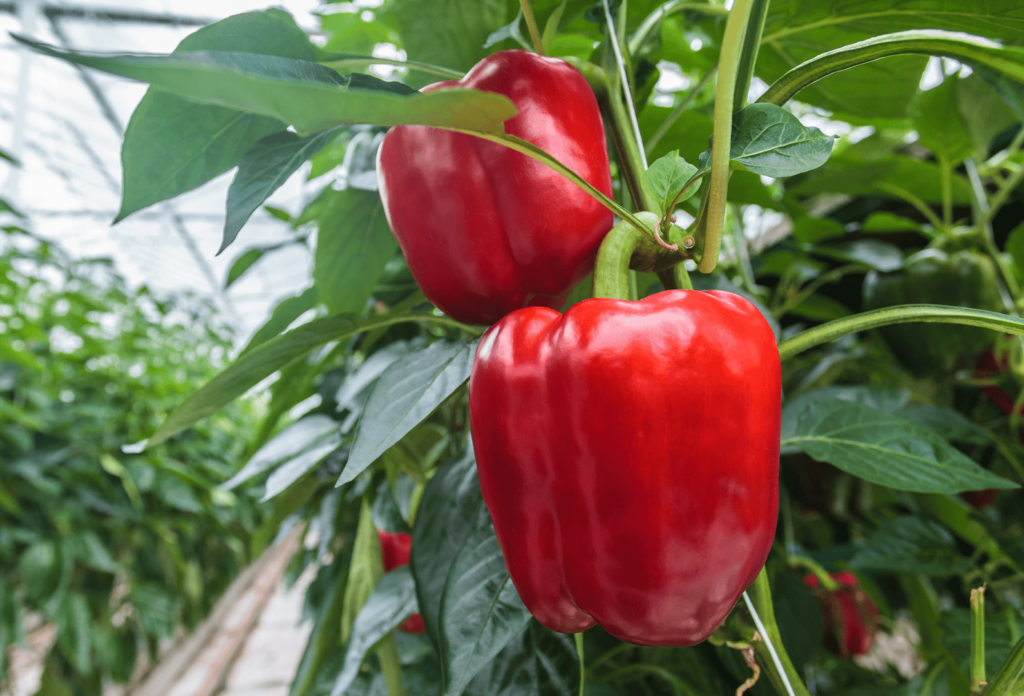
Red bell pepper: The fully mature pepper and the sweetest variety. It contains more potassium and carotenoids and is used to produce sweet paprika;
Purple bell pepper: Sweet in flavor and the variety with the highest amount of anthocyanins.
Health benefits of bell peppers
Rich in vitamins A, C, and E, bell peppers act as powerful antioxidants, strengthening the immune system, protecting vision, and contributing to skin health. They are low in calories, high in fiber—which helps digestion and promotes satiety—and contain essential minerals such as potassium, magnesium, and iron, all vital for bodily balance.
Their natural pigments also have antioxidant properties that help combat cellular aging.
Best nutrients for hydroponic bell peppers
In hydroponics, the nutrient solution is the heart of the system: it replaces soil and provides all essential nutrients for plant development. In bell pepper production, the balance and quality of this solution directly determine crop success.
During the vegetative phase, nitrogen (N) is primarily responsible for leaf and stem growth. During the flowering and fruiting stages, the demand for phosphorus (P)—which stimulates flowers and roots—and potassium (K)—which ensures larger, firmer, and tastier fruits—increases significantly.
Nutrients such as calcium (Ca) and magnesium (Mg) are also essential to maintain fruit integrity and prevent issues like blossom-end rot. In addition, micronutrients such as iron, zinc, manganese, and boron are crucial, even in small amounts.
Maintaining pH between 5.5 and 6.5 and adjusting electrical conductivity (EC) according to the plant’s stage are fundamental practices. Regular solution changes help prevent salt buildup and ensure a constant supply of nutrients.
How to grow bell peppers hydroponically
Hydroponic bell pepper cultivation requires attention at every stage but offers excellent results when properly managed.
Germination can be done in phenolic foam or coconut fiber, and seedlings should be transplanted once they reach 10–15 cm, with well-developed roots.
Among the most recommended systems are substrate-based grow benches, which offer better support for bell peppers. After transplanting, staking is essential—using ties or support rods to hold the branches and prevent breakage due to fruit weight.
Since the crop is grown in a protected environment, pollination must be assisted, either manually by gently vibrating the flowers or using specific equipment.
During plant development, it is important to monitor pH, electrical conductivity, and solution temperature, as well as perform pruning and pest control to maintain plant vigor.
The typical harvest period begins 90 to 120 days after transplanting, and production can extend for 3 to 5 months depending on the variety and growing conditions.
Fruits can be harvested green or left to ripen into yellow, orange, or red stages, increasing their commercial value.
After harvesting, peppers should be handled carefully and sold quickly to preserve their freshness, flavor, and high nutritional value.
How Hortivinyl can support your hydroponic cultivation
Hortivinyl is a leading provider of efficient solutions for hydroponic farming, offering products that ensure high productivity, resource savings, and practical day-to-day management.
For bell pepper cultivation, the Hortivinyl Pot Holder Gutter and Hortivinyl Slab System offer a major advantage for growers seeking better nutrient-solution use, moisture control, and maximum production efficiency.
These gutters are made of high-quality PVC and feature a drainage system that collects excess solution, preventing waste of water and nutrients, reducing the use of crop protection products, and ensuring healthier plants.
✔️ Higher yield and better-quality fruits
✔️ Less waste and lower production costs
✔️ Durability, safety, and practicality for the grower’s daily routine
With Hortivinyl, you have the technology and support needed to build a productive and sustainable hydroponic structure—from planting to harvest.
Visit our website and discover how to optimize your hydroponic cultivation.

Mitsuo Shibata
Agricultural Engineer and Consultant


